 (888) 979-7969
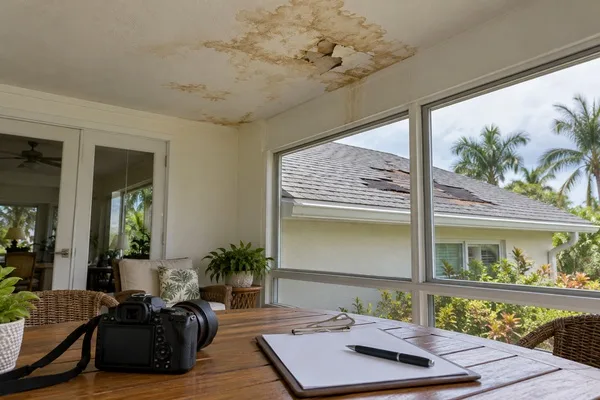
Orlando homeowners hire a public claims adjuster before filing because the documentation gathered in the first days after a storm shapes the whole claim. A public adjuster works for you, not the insurance company, and records the full scope of the damage so less gets missed, disputed, or underpaid later.
At Ultra Property Damage, we have worked on property damage since 1983, and there is no fee unless you recover. To talk through your damage before you file, reach out to our team or call (888) 979-7969.
Why does early documentation protect your storm damage claim?
Because the evidence is freshest right after the storm. Water spreads, materials dry, temporary repairs cover things up, and the longer you wait, the harder it is to prove what the storm actually caused.
Insurers review claims based on what you can show. Clear photos, notes, and a record of when damage appeared help connect each problem to the storm. Without that, an adjuster may treat damage as old wear or a maintenance issue.
That matters in older Orlando neighborhoods like College Park, near our office on Edgewater Drive, where mature oaks and older roofs often mean a mix of storm damage and prior wear. Separating the two is easier when the record starts early.
Timing has legal weight too. Under Florida law, notice of an initial or reopened property claim must be given within 1 year of the date of loss, and supplemental claims within 18 months, per Florida Statute 627.70132. Your policy may also require prompt notice, so do not wait.
What does a public claims adjuster capture that homeowners often miss?
Hidden and secondary damage. Homeowners usually record what they can see, like a missing shingle or a wet ceiling, but the claim also needs what is behind it: soaked insulation, damaged decking, wet drywall, flooring, and spots where moisture may lead to mold.
We worked with one homeowner who was making a list for his insurance claim. He had listed ceiling damage, but his photos only showed a wet spot in the kitchen ceiling. We came in and helped him organize supporting photographs that gave a more complete idea of the damage.
He told us he had been so focused on moving buckets to catch water that he had not recorded the damage well. That is completely normal. In the middle of a leak, protecting your home comes first.
Across Orlando, from homes near Lake Ivanhoe to newer communities toward Ocoee and Kissimmee, wind-driven rain finds its way in differently. A trained eye follows the path of the water, not just the stain. See how we approach wind damage claims.
How does thorough documentation affect the final payout?
The settlement can only cover what the claim includes. When damage is not documented, it is often left out, and getting it added later can mean extra back and forth with the insurer.
A complete claim pairs photos with an accurate repair estimate. Our team includes a licensed general contractor and roofing contractor, so we can prepare an estimate based on what the repairs will really take, which gives you a stronger position when negotiating with your insurance company.
Small details add up. Matching materials, removing damaged layers, drying out wet areas, and repairing interior finishes are all part of returning a home to its pre-loss condition. Each one belongs in the claim if the storm caused it.
No adjuster can promise a specific result, and every policy is different. But a well-documented claim is easier to support, easier to defend if questioned, and less likely to be underpaid because something was missed.
How is a public adjuster different from the insurance company's adjuster?
The biggest difference is who they represent. The insurance company's adjuster works for the insurer. A public adjuster is licensed to work for the policyholder, helping you understand what your policy covers and presenting your claim.
The insurer's adjuster may be handling many claims after a major storm, with limited time at each property. That does not mean they are acting in bad faith, but their job is to evaluate the claim for the company, not to build your case.
A public adjuster reviews your policy, inspects the damage, documents it, prepares the estimate, and negotiates with the insurer on your behalf. Ultra is licensed as a public adjuster under license P208998, with mold assessment license MRSA3671 for claims that involve moisture.
We also handle more than storms, including water, fire and smoke, hail, mold, and other losses. Learn more about our property damage claims services.
When should you call a public adjuster after a storm?
Call before you file, or as soon as possible after the storm. Early involvement means the documentation, policy review, and estimate are in place before the insurer's adjuster arrives.
In the meantime, stay safe and prevent further damage. Cover openings, move belongings away from leaks, and keep receipts for anything you buy. Take wide and close photos of every damaged area before cleanup, and save any damaged items until they are documented.
Already filed? You can still call us. We help with new, denied, and underpaid claims, and we can review where your claim stands. Our team can also handle temporary repairs and restoration as your general contractor once the claim moves forward.
Storm damage is stressful, but you do not have to handle the claim alone. Schedule your free claim review with Ultra Property Damage or call (888) 979-7969 before you file.